ગુજરાતી ગીતો
નારાયણનું નામ જ લેતા.
નારાયણનું નામ જ લેતા વારે તેને તજીએ રે
મનસા વાચા કર્મણા કરીને લક્ષ્મીવરને ભજીએ રે… નારાયણ નું નામ જ લેતા…
કુળને તજીએ કુટુંબને તજીએ તજીએ મા ને બાપ રે
ભગિની સુત દારાને તજીએ જેમ તજે કંચુકી સાપ રે… નારાયણ નું નામ જ લેતા…
પ્રથમ પિતા પ્રલાદે તકિયા નવ તજિયું હરિ નામ રે
ભરત શત્રુગ્ન તજી જનેતા નવ તજિયા શ્રીરામ રે…. નારાયણ નું નામ જ લેતા…
ઋષિપત્નીએ હરિને કાજે તજિયા નિજ ભરથાર રે
તેમાં તેનું કાંઈ એ ન ગયું પામી પદારથ ચાર રે…. નારાયણ નું નામ જ લેતા…
વ્રજવનિતા વિઠ્ઠલને કાજે સર્વ તજી વન ચાલી રે
ભણે નરસૈયો વૃંદાવનમાં મોહન સાથે મા’લી રે…. નારાયણ નું નામ જ લેતા…
English Lyrics
Narayan nu naam j letaa,
Narayan nu naam j letaa vare tene tajiye re,
Manasa vacha karmana kari ne Lakshmivara ne bhajiye re…
Narayan nu naam j letaa…
Kul ne tajiye, kutumb ne tajiye, tajiye maa ne baap re
Bhagini, sut, dara ne tajiye, jem taje kanchuki saap re…
Narayan nu naam ja letaa…
Pratham pita Prahlade takiya, nav taji yu Hari naam re
Bharat, Shatrugna taji janeta, nav tajiya Shri Ram re…
Narayan nu naam ja letaa…
Rishi-patni e Harine kaaje, tajiya nij bharthar re
Tema tenu kai e na gayu, paami padarth chaar re…
Narayan nu naam ja letaa…
Vraj-vanita Vitthal ne kaaje, sarva taji van chaali re
Bhane Narsaiyo Vrindavan maa, Mohan saathe maali re…
Narayan nu naam ja letaa…
The Essence of Devotion by Narsinh Mehta
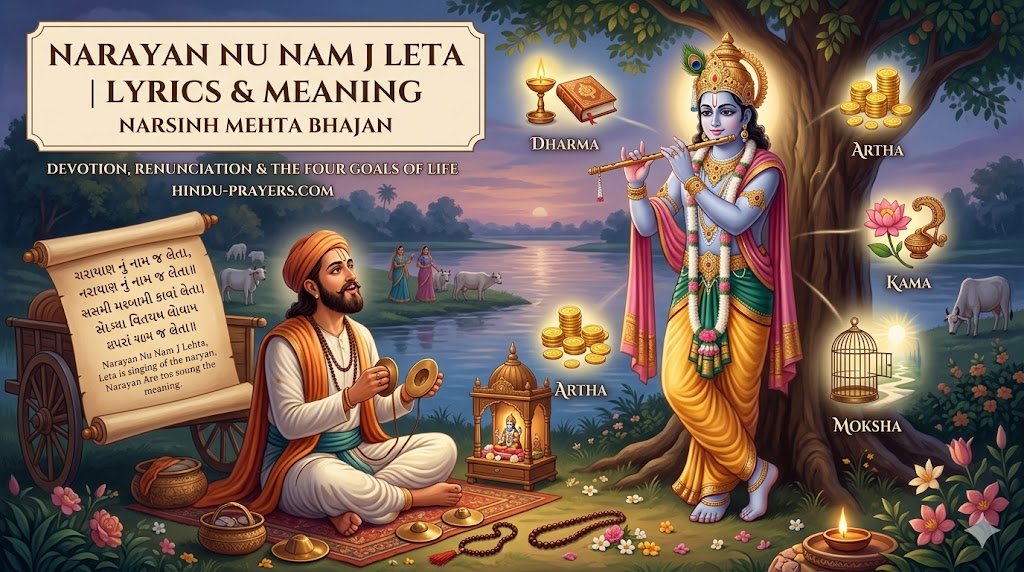
The bhajan “Narayan Nu Nam J Leta” is a masterpiece by the legendary 15th-century poet-saint Narsinh Mehta. Known as the Adya Kavi (First Poet) of Gujarati literature, Mehta’s works often revolve around the theme of unconditional surrender to Lord Krishna (Narayan).
This specific bhajan is a powerful anthem of vairagya (renunciation). It challenges the devotee to prioritize the divine name of Narayan above all worldly attachments—even family, status, and societal norms.
Verse-by-Verse Meaning and Interpretation
To truly appreciate the depth of this bhajan, one must understand the historical and mythological references Narsinh Mehta uses to justify absolute devotion:
- The Power of the Name: The opening lines emphasize that if someone hinders your path to Narayan, you must distance yourself from them, focusing your mind (Mansa), speech (Vacha), and actions (Karman) on the Lord.
- The Examples of Great Devotees:
- Prahalad: Mentioned as the first example, Prahalad chose Lord Hari over his own father, the demon-king Hiranyakashipu.
- Bharat & Shatrughna: They chose the path of righteousness and devotion to Shri Ram over their own mother’s (Kaikeyi) wishes.
- The Rishipatnis & Gopis: These verses highlight that even the bonds of marriage and social decorum (the wives of Sages and the Gopis of Vraj) were set aside to reach the feet of Vitthal (Krishna).
- The Ultimate Reward: Mehta explains that by letting go of these attachments, one achieves the “Padarth Chaar”—the four goals of human life: Dharma (Duty), Artha (Wealth), Kama (Desire), and Moksha (Liberation).
Frequently Asked Questions
Who wrote the bhajan “Narayan Nu Nam J Leta”?
The bhajan was composed by the famous Gujarati saint-poet Narsinh Mehta, who is also the author of the world-renowned “Vaishnav Jan To.”
What is the central theme of this bhajan?
The central theme is the supremacy of Divine Love. It suggests that spiritual progress sometimes requires the renunciation of worldly ties that prevent a soul from connecting with the Creator.
What does “Padarth Chaar” mean in the lyrics?
In Hindu philosophy, “Padarth Chaar” refers to the Purusharthas: Dharma, Artha, Kama, and Moksha. Narsinh Mehta suggests that true devotion leads to the fulfillment of all these four aspects of life.
Leave a Reply